
About · Measurement guide
How to measure
your dog
We demand a «second skin» fit: absolute tactical precision. Your K9 harness is like your service weapon or anchor carabiner: their life insurance. On helicopter inserts, a 2 cm error causes chafing, asphyxiation or lethal failures.
Operational recommendations
Four non-negotiable rules
Tailor's tape
Flexible tailor's measuring tape. Never use rigid construction tapes — they falsify every contour.
Static station
Dog must stand on all four legs on a level surface. No sitting, no weight shifting.
Coat compression
On thick coats, compress the tape firmly against the skin. We're after real bone and muscle structure, not coat volume.
Second skin
«Neither tight nor loose». The tape should slide under one finger of tension — that is the target fit of the finished harness.
Measurement points
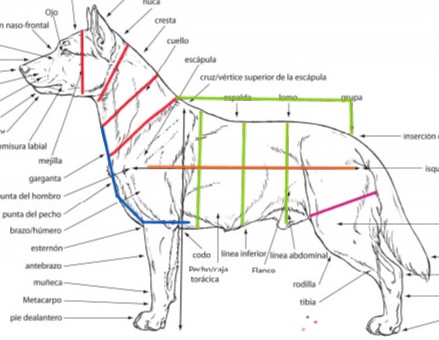
Six critical measurements
Neck circumference
Wrap around the neck at its lowest point, where the operational collar rests. Firm tape against bone and muscle, no slack.
Thoracic girth
Measure the girth just behind the elbows, at the widest point of the rib cage. This defines the primary harness fit.
Withers to croup
Straight-line distance from the withers (top of the scapula) to the base of the tail. Sets the length of the harness body.
Flank / abdomen
Girth immediately in front of the hip, over the flank. Reference for the lumbar module and rear suspension anchor.
Height to ground
Vertical height from the ground to the withers, dog standing still on a level surface.
Working weight
Actual dog weight in working condition. Determines harness load class and anchor over-sizing.
To guarantee a «second skin» fit, the Arnés Nórdico expert team will validate the measurements through photographs to map the dog. Real millimetre precision so the gear never fails.